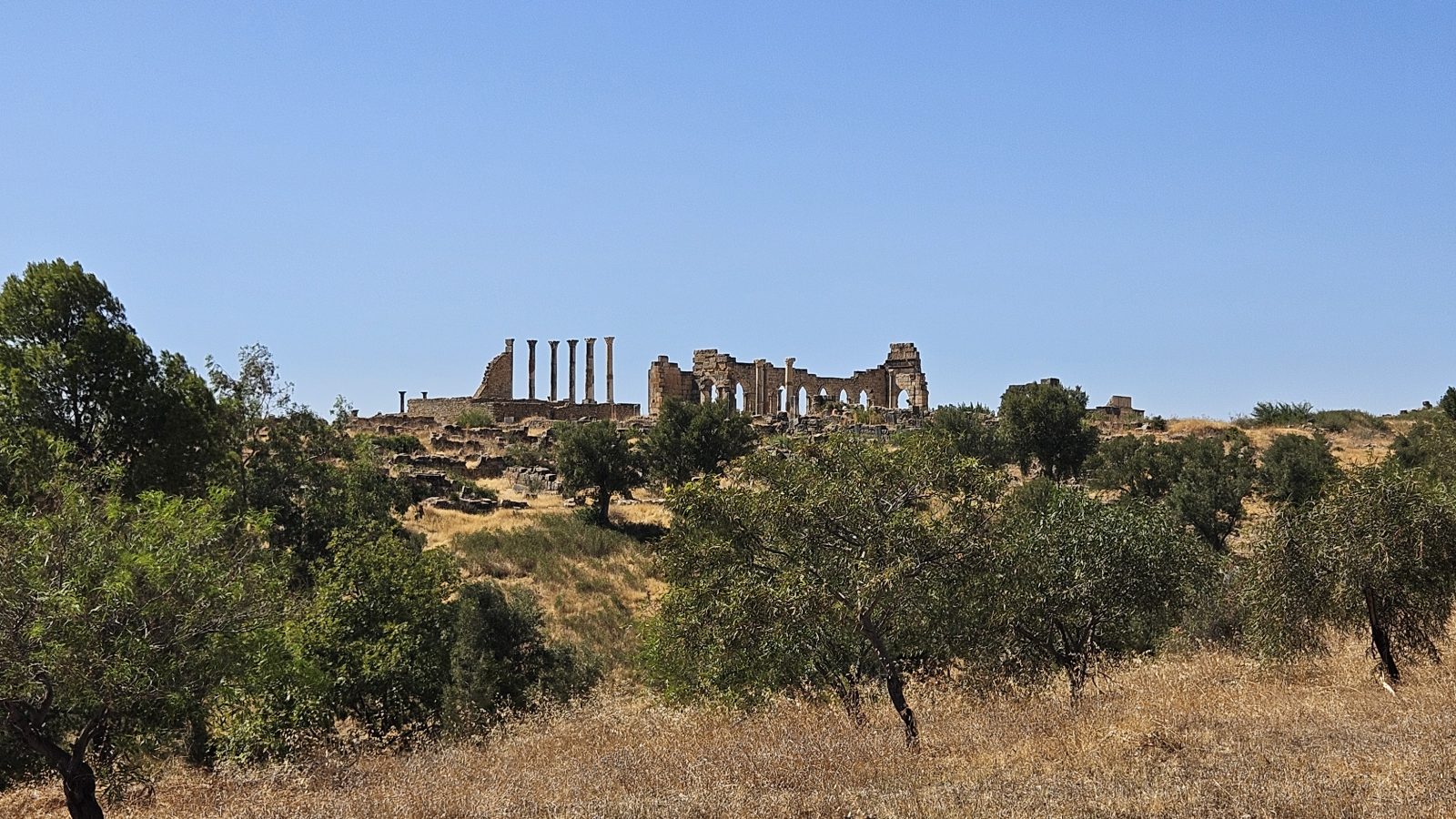
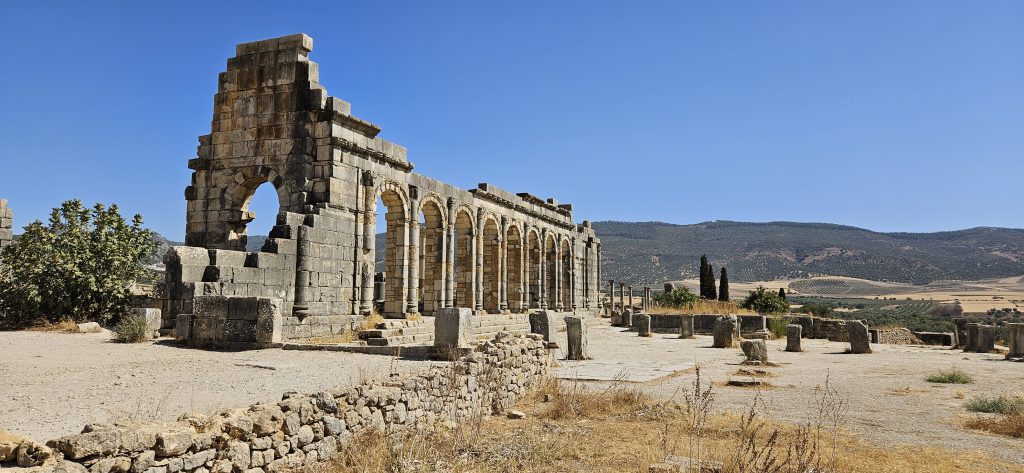
The ruins of Volubilis date back to the 3rd century BCE and it was occupied until the 11 century AD. From 44 to 285 AD it was the bustling capital of the remote Roman province of Mauretania Tingitana.
It was a wealthy town—fertile grain and olive oil-producing lands surrounded it—and its 20,000 Romanised Amazigh inhabitants lived in fancy villas lining broad avenues. Today, the archaeological site is a UNESCO World Heritage Site. (source)
Read more: Volubilis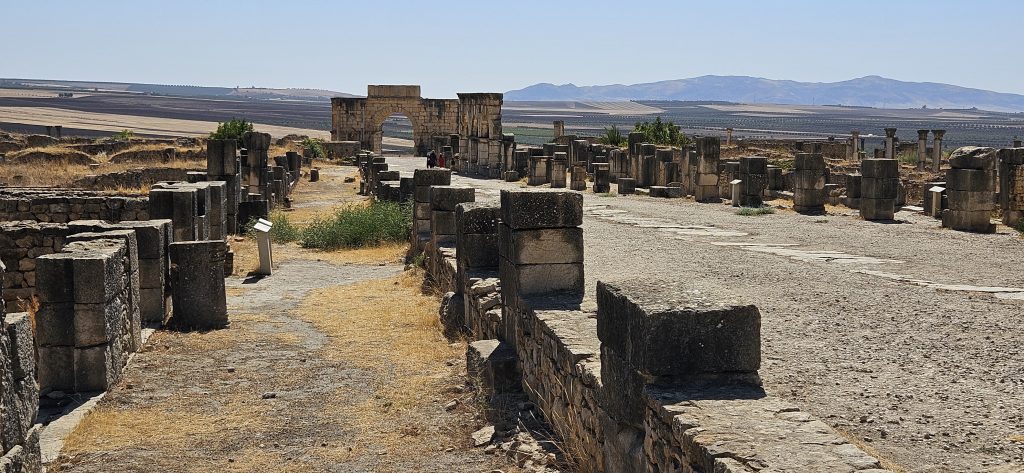
The main street, Decumanus Maximus looking towards the Arch of Caracalla. The street cuts through the new town and was flanked by shops, behind which were the houses of the elite.
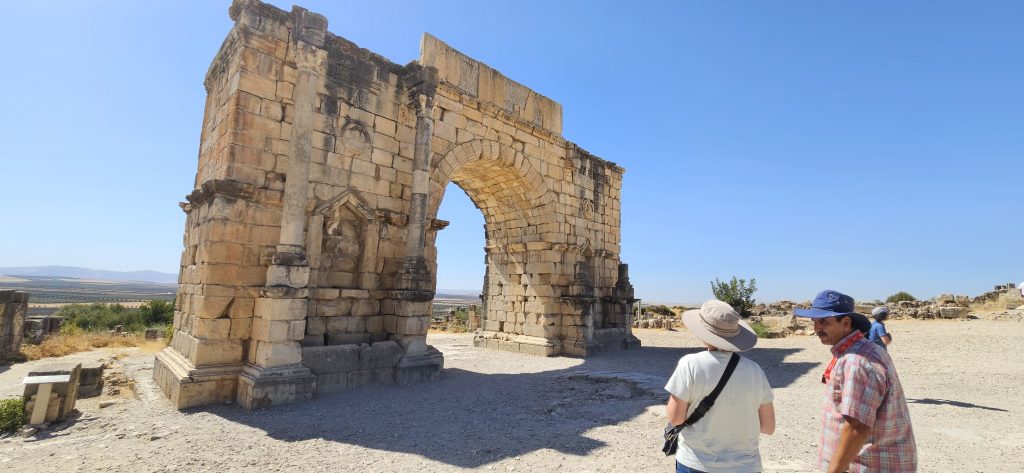
In Roman times the triumphal arch of Volubilis was topped with six horses pulling a chariot and decorated with nymphs and medallions. It was built by the governor in honor of Caracalla [Marcus Aurelius] and his mother Julia Domna in 217 AD. Caracalla was a North African himself and in his edict of 212 AD had announced Roman citizenship to all free inhabitants, which translated to immunity from certain taxes.
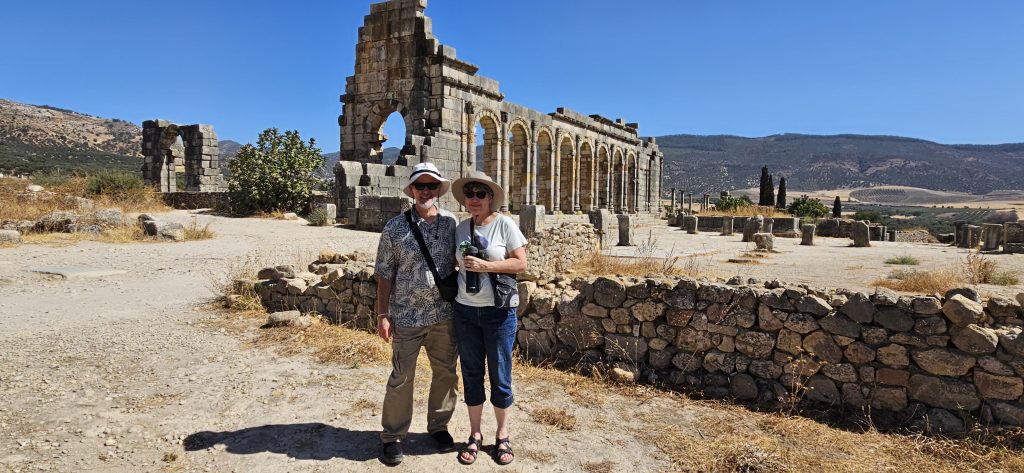
Basilica in Roman terminology refers to the edifice used as a courthouse and for administration of the state. One of the finest basilicas built in provincial northern Africa, the one at Volubilis is a large double-storeyed structure measuring 42.2 metres long and 22.3 metres wide. In front of the Basilica is the Forum where markets were held.
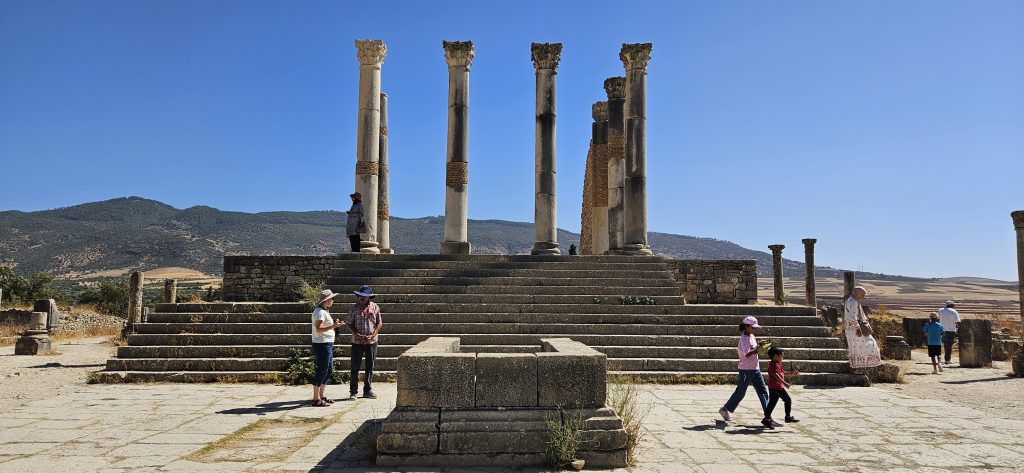
One of the most important buildings in every Roman town was the Capitoline Temple dedicated to the three principal deities of state: Jupiter, Juno, and Minerva. These three were worshiped by the civic assembly in both good and bad times. Volubilis was no different. Its Capitoline Temple built in 218 AD stands behind the Basilica and comprises of 13 steps leading to a Corinthian columned edifice.
Volubilis mosaics
The mosaics of Volubilis are remarkable in that they are still located in the very spot where they were created almost 2000 years ago. For more detailed descriptions and info see here and here.
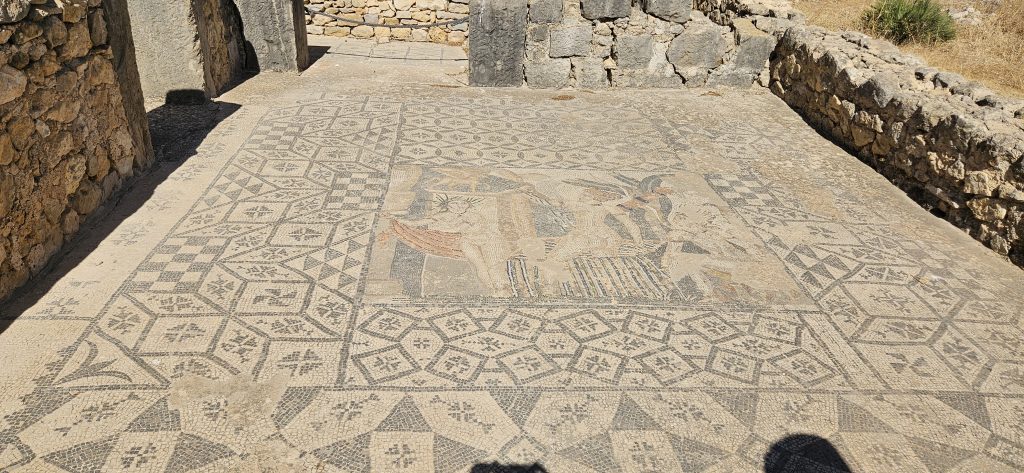
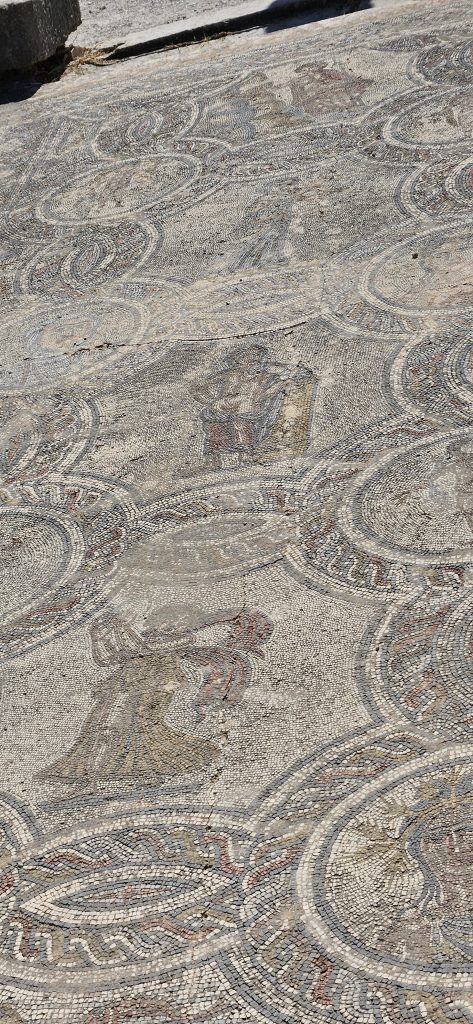
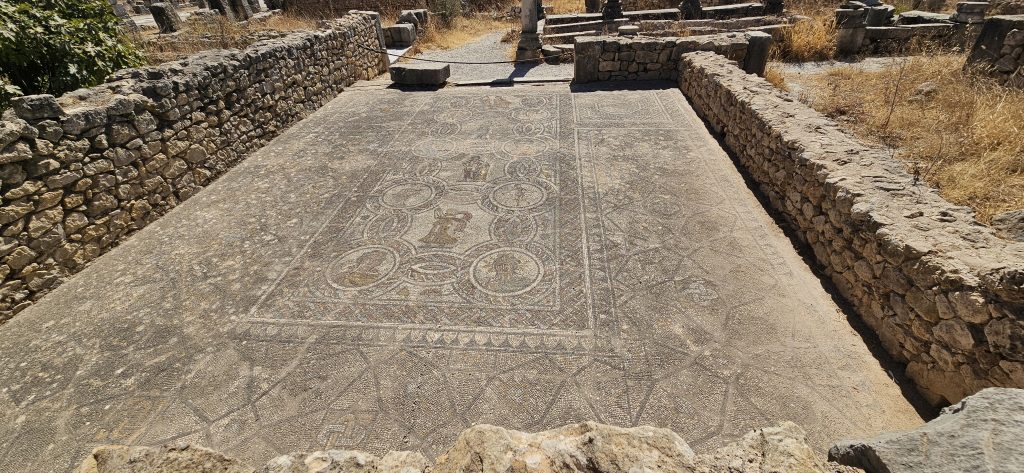
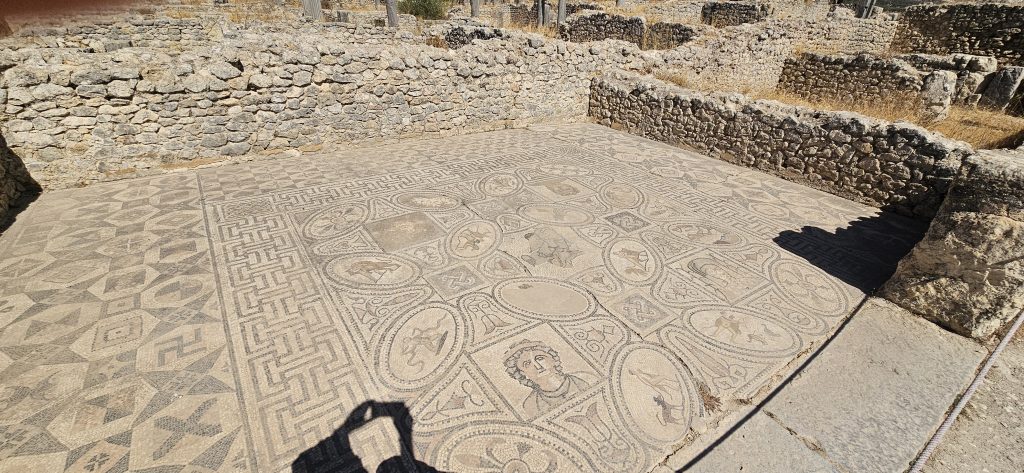
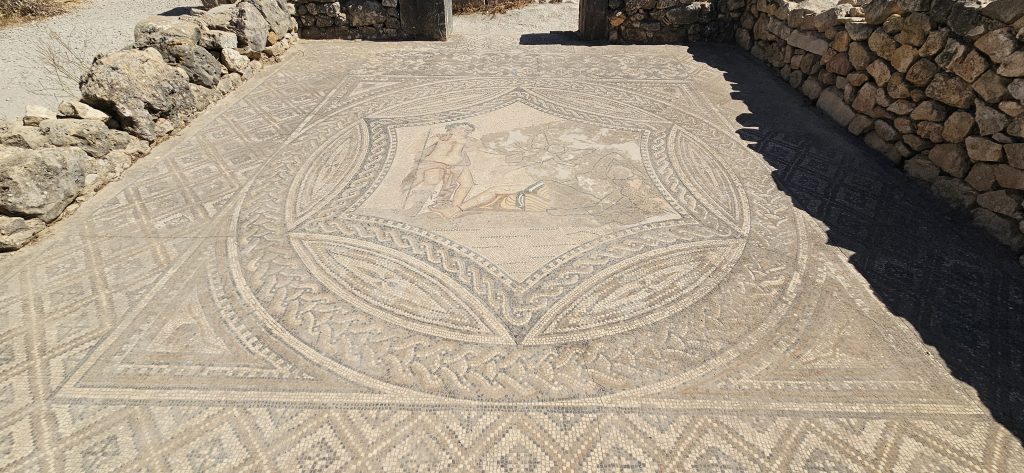
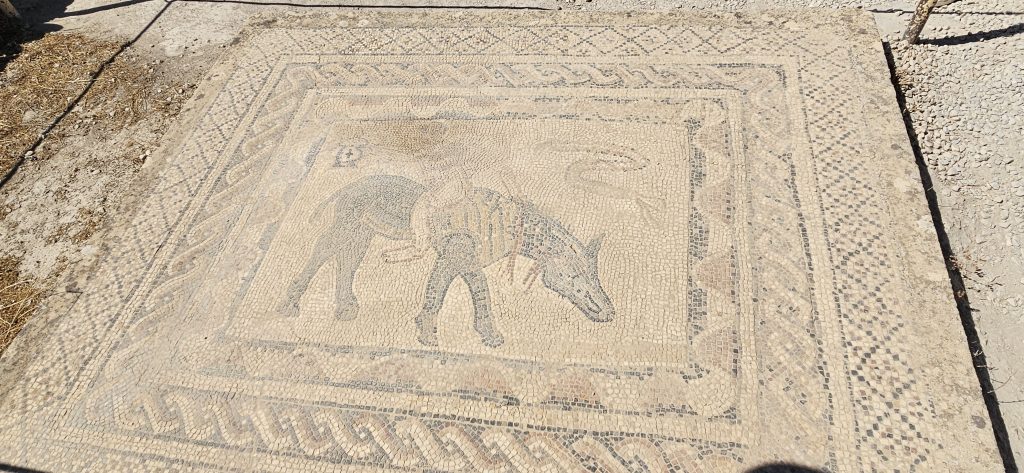
Laura and I visited Volubilis on Sept. 3, 2025 on our drive from Tangier to Fes. It was quite hot and so we only explored the site for about a little over an hour.