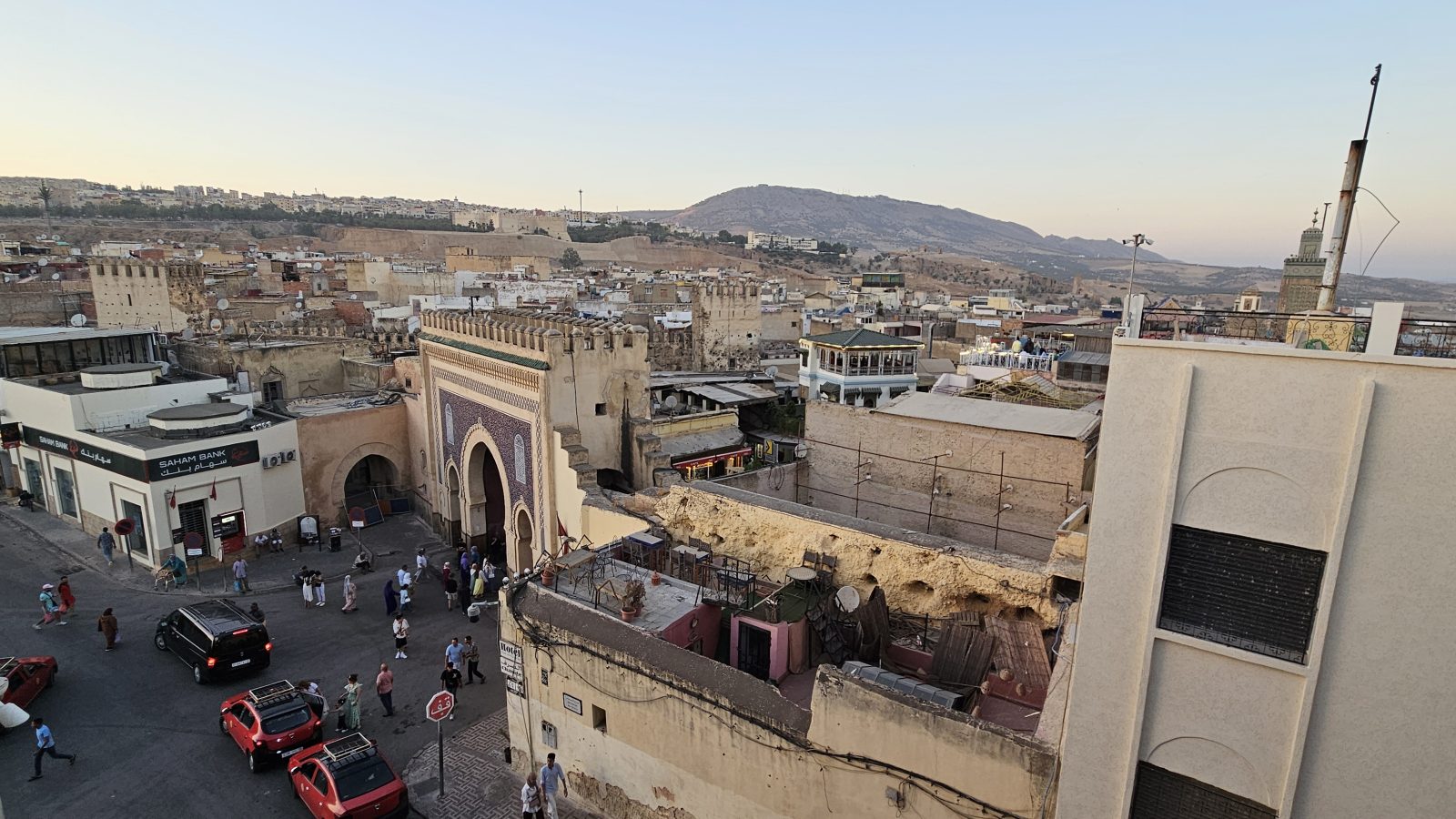
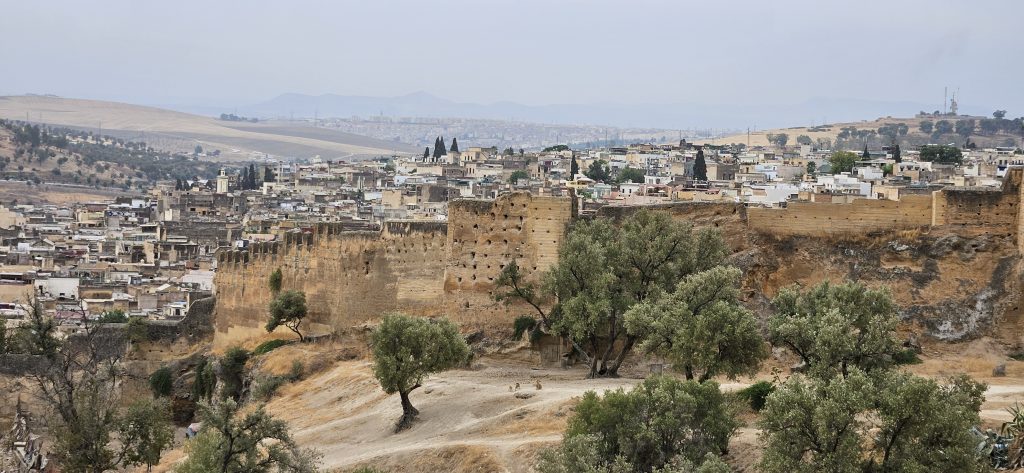
On Sept. 3, we drove to Fès (via Volubilis) and spent the next day in Fès el Bali – the oldest part of the city of Fès dating back over 1200 years. Fès el Bali was founded as the capital of the Idrisid dynasty between 789 and 808 AD. The neighborhood has the Al-Qarawiyyin University at it’s center, which was founded in the year 859 AD, and has been operating as an institution of higher learning continuously since then – longer than any other anywhere.
Read more: Fès el Bali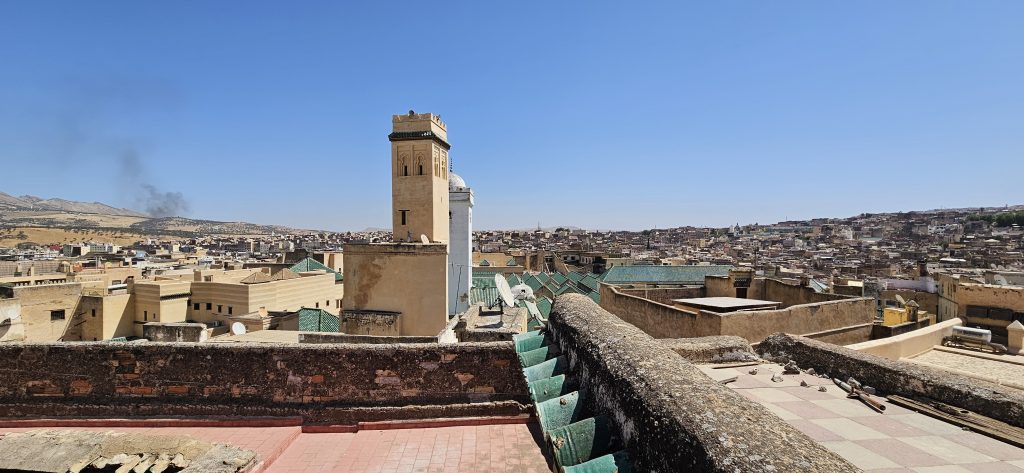
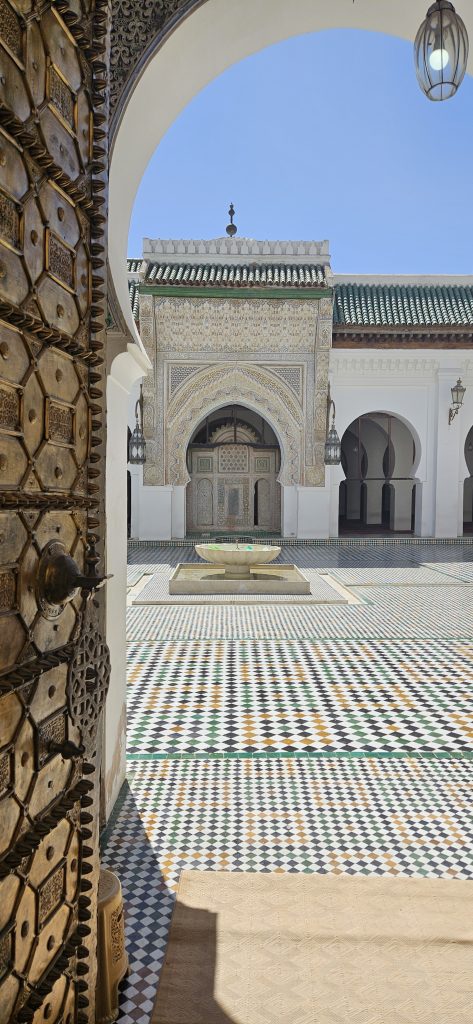
This ancient place of higher learning was founded as a mosque and became a leading center of religious studies and general education. It is now part of the Moroccan state university system. As it is still a mosque, non-muslims are not allowed inside, so we infidels can only take a peek through the front door or from the adjacent rooftops.
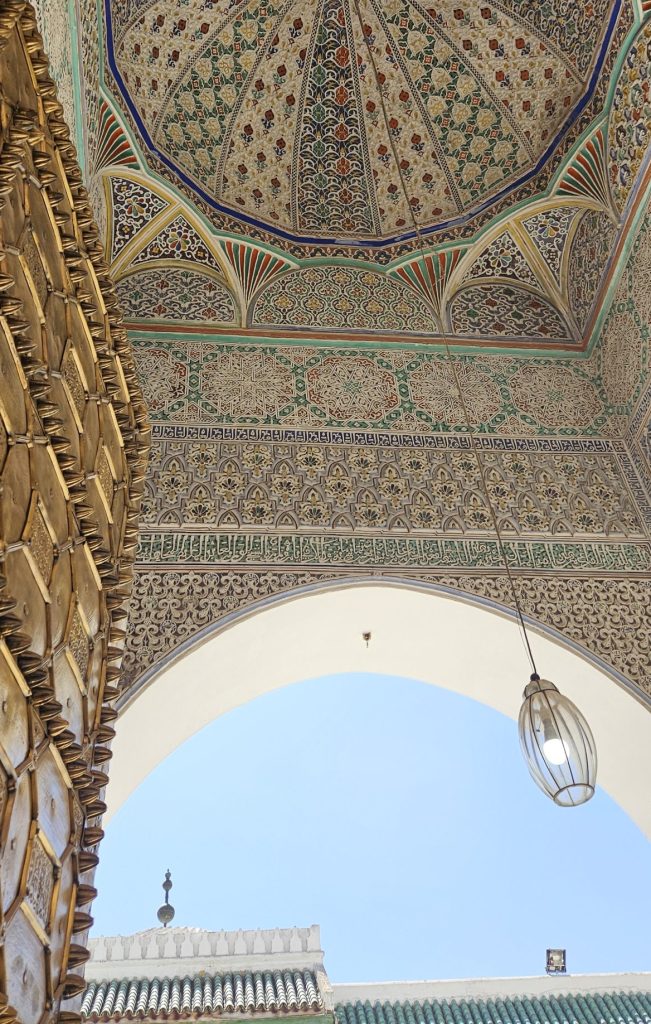
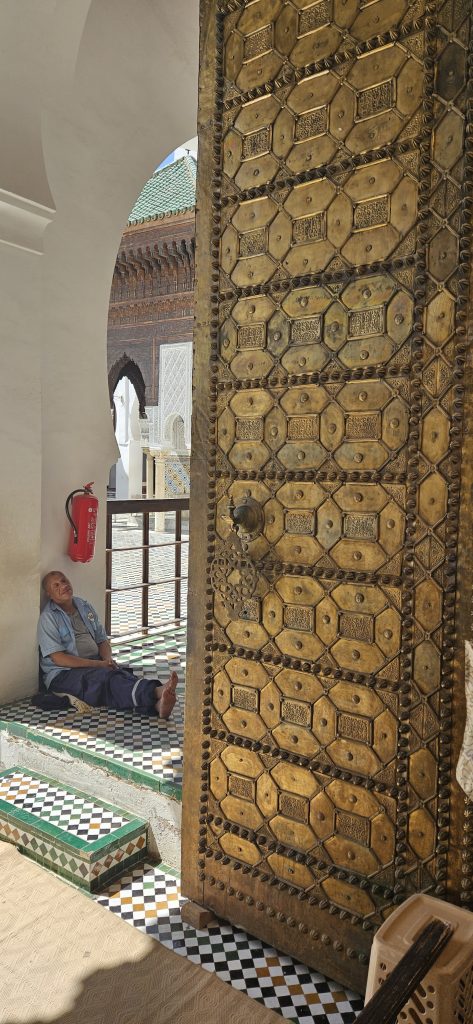
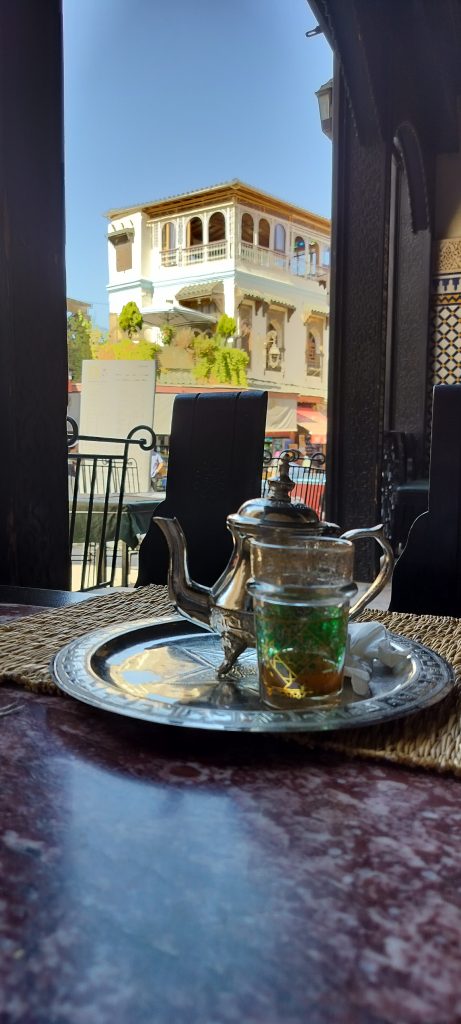
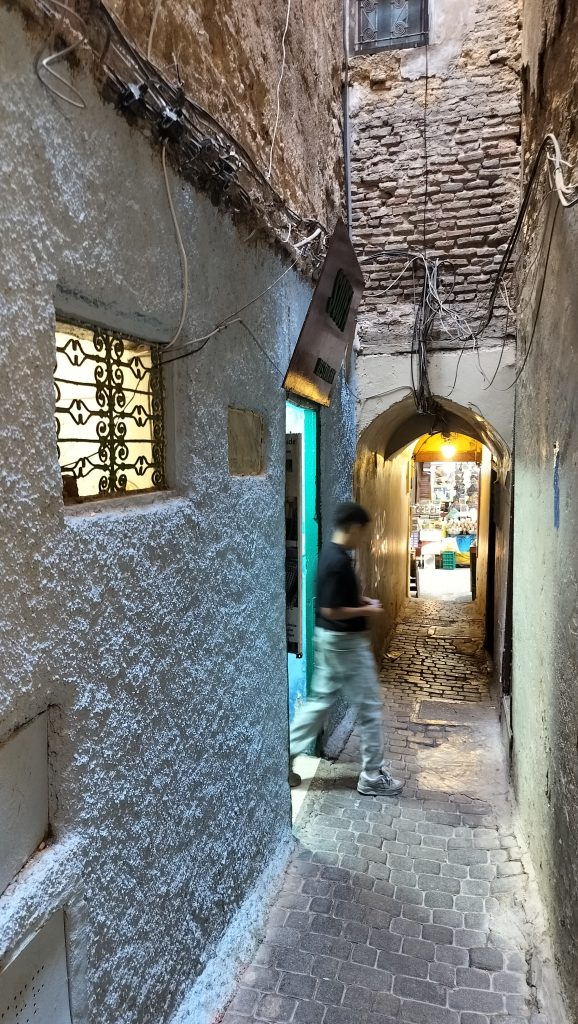
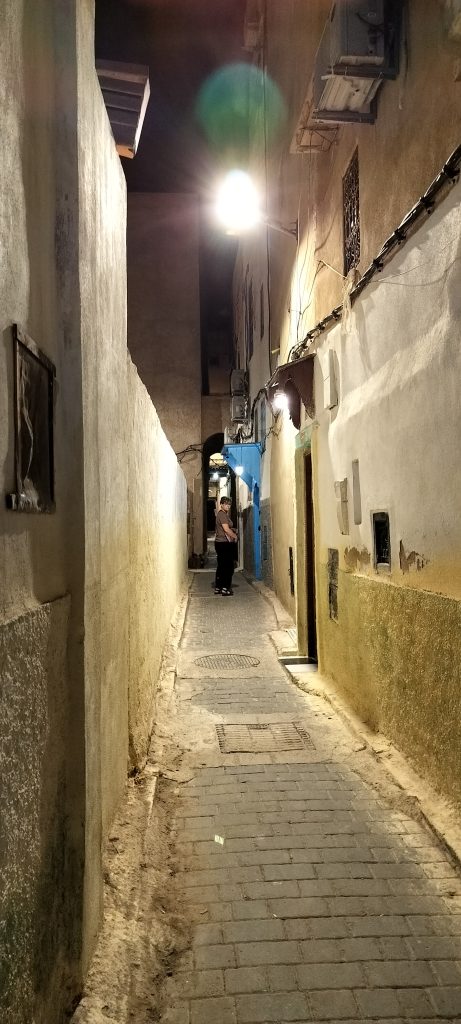
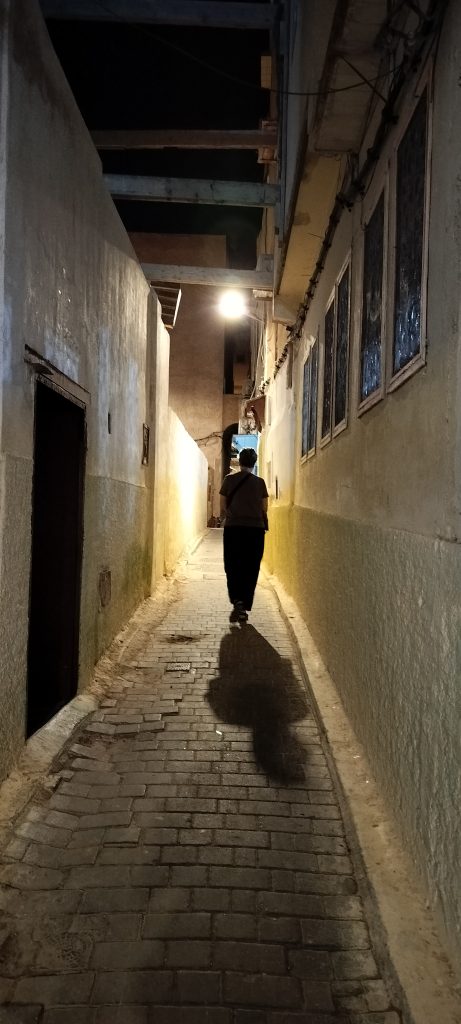
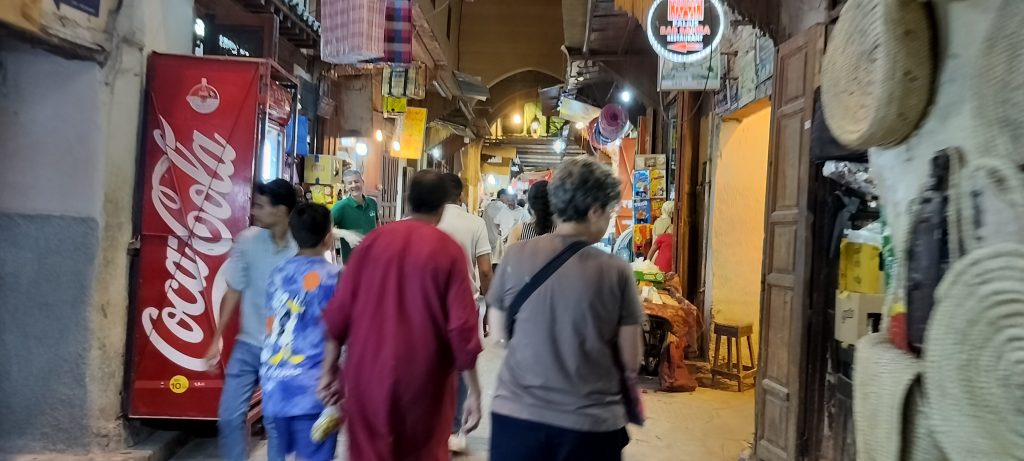
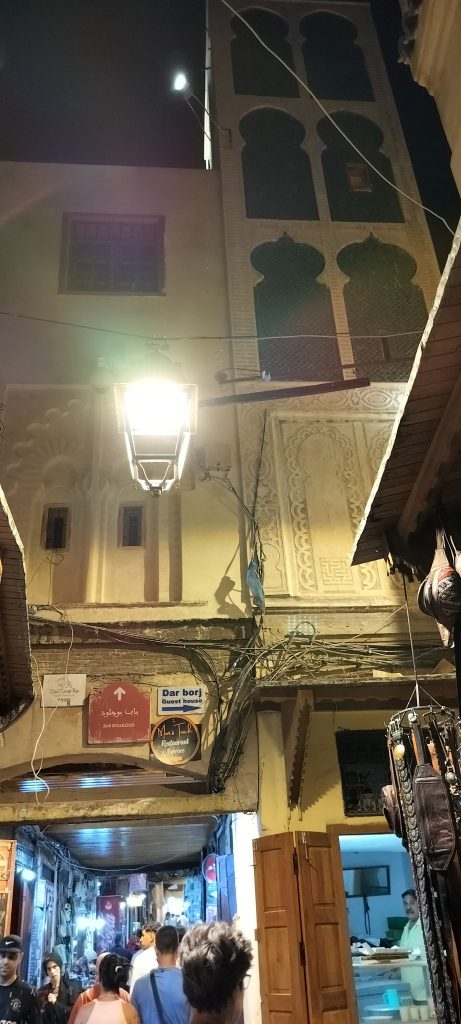
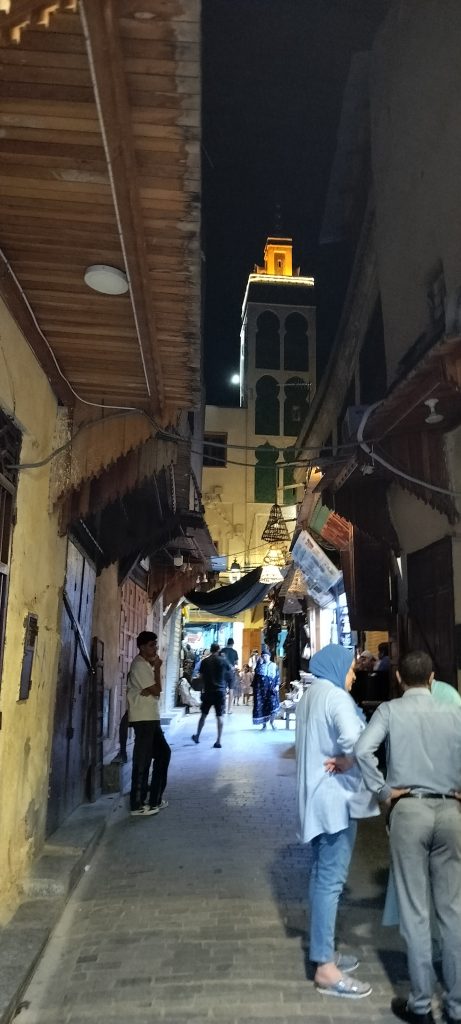
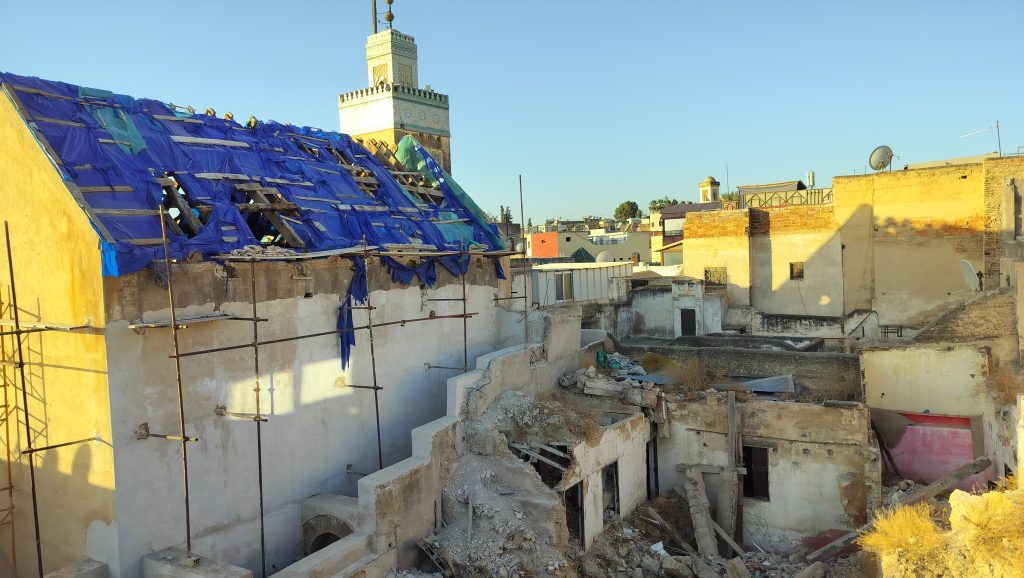
Once one enters Fès el Bali through one of the gates of the ancient city wall, it’s easy to get lost in the labyrinth of narrow streets and alleys. At times it’s not even obvious whether you’re inside or outside a building. It does not help that frequently locals offer to “help you” find a place, only to take you to their cousin’s shop or riad. Google Maps, although somewhat helpful, is not precise, and the location markers for some places can be dead-wrong. The main, reliable navigation principle is that heading downhill leads you east and uphill leads generally west, towards Bab Boujeloud. There are now also direction markers in the main streets. That said, it’s also no big deal to get lost – you just may end up in some family’s courtyard.
Maimonides’ House
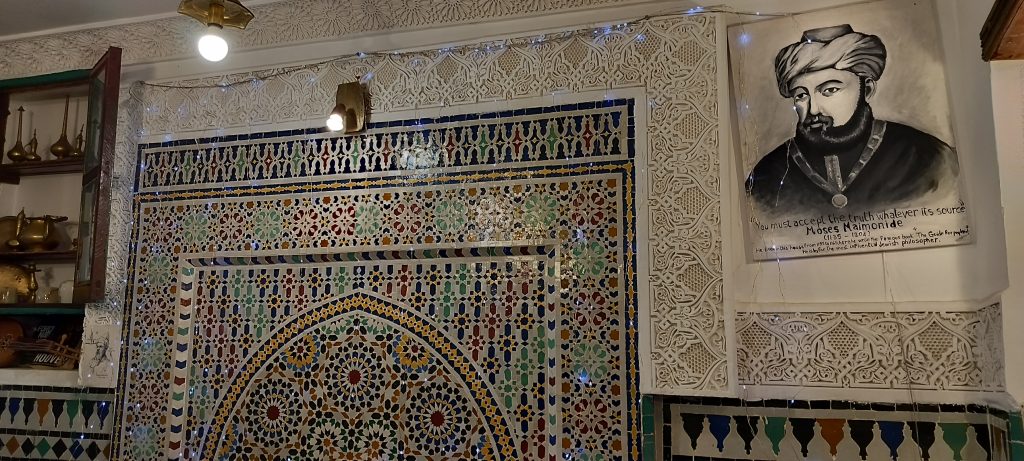
Just around the corner from the Riad where we stayed was the house where the famous Jewish scholar and philosopher Maimonides lived – probably from 1160 to 1165 – after his family fled from Cordoba due to religious persecution by the Almohad dynasty.
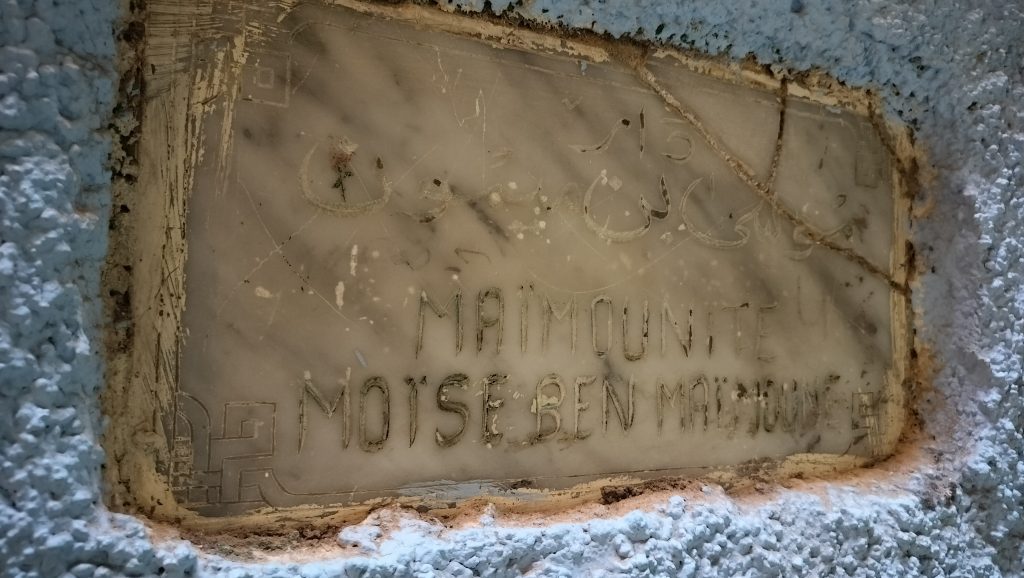
During his time in Fès, he began writing commentaries on the Talmud, pursued his medical education, and composed the Epistle on Persecution “Iggered Hachemad.” He later moved to Egypt after further religious pressures forced his family to leave Morocco.
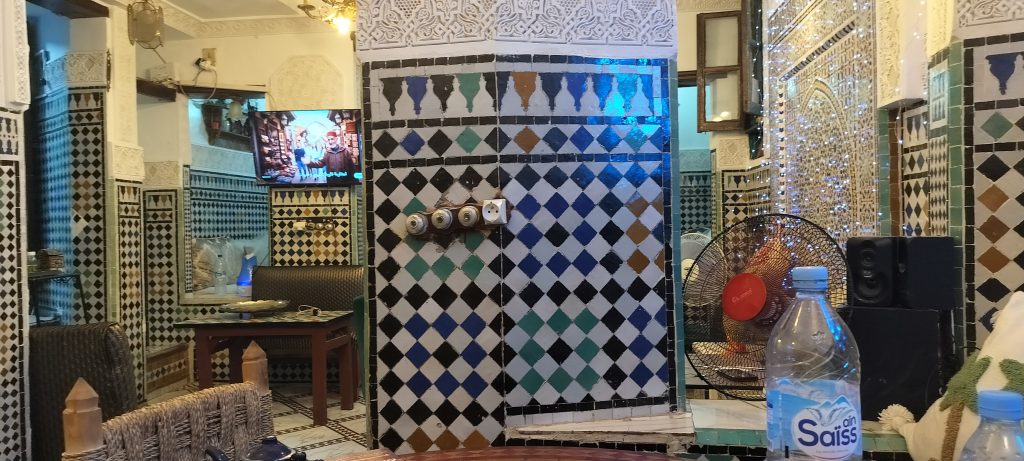
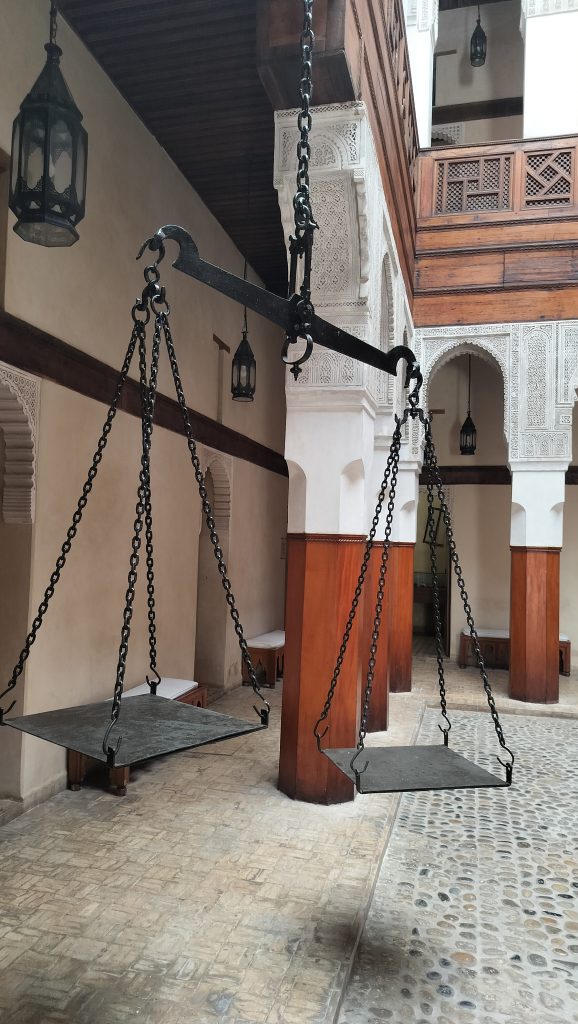
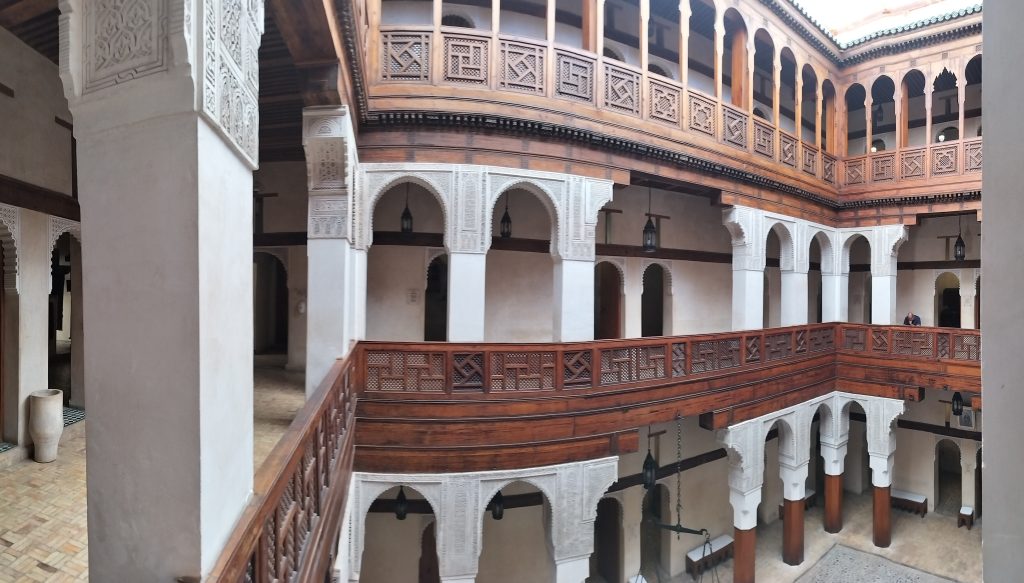
The house that has the plaque indicating that Maimonides (Moise Ben Maimoune) lived here is now a restaurant. However, it’s not clear to me if that’s actually correct, as some sources state that the house that has the water clock (or what remains of it) was actually the Maimonides’ house. It’s also quite possible that both is true, as it is quite difficult to discern where one house ends and another begins, and the restaurant with the plaque is in an alley right next to the Dar al-Magana – the waterclock house.
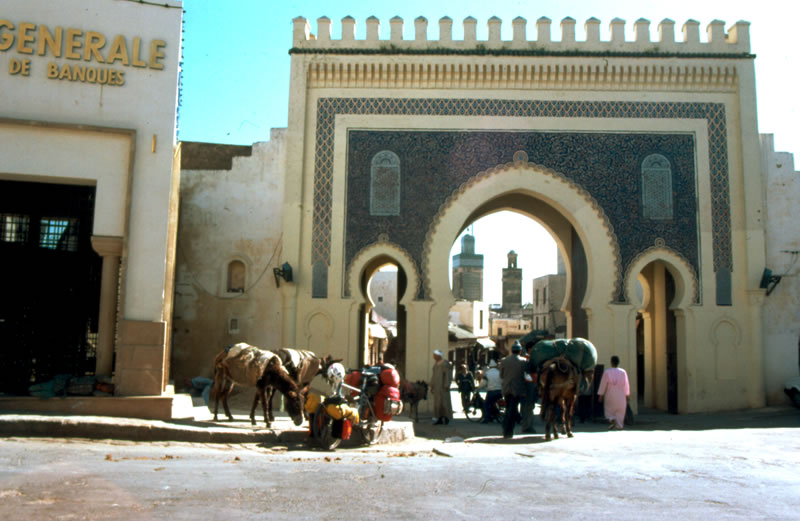
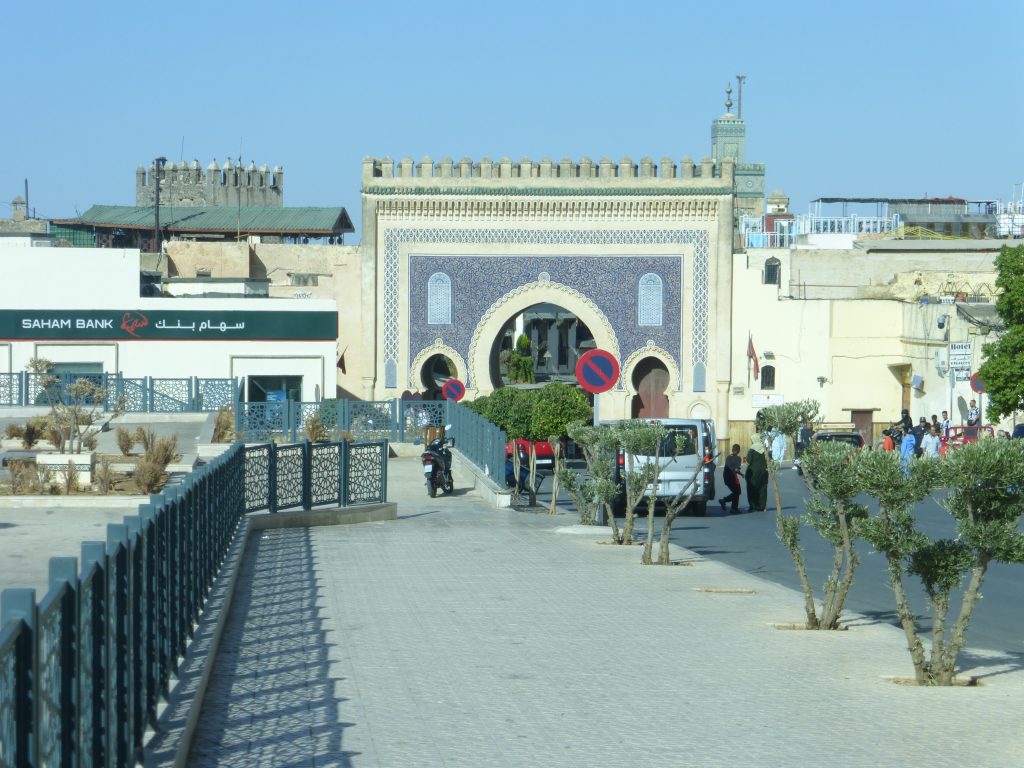
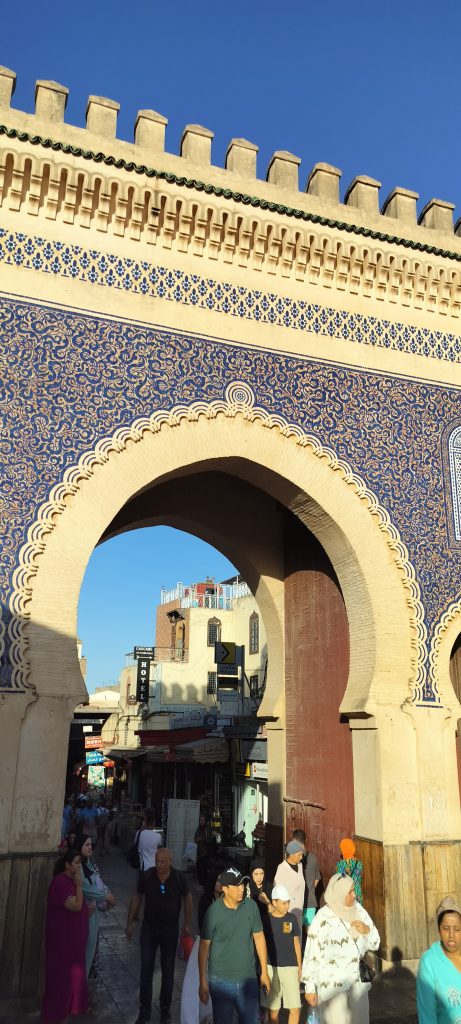
The Bab Boujeloud – the blue gate – was built in 1913 as a grand entrance to the old city, right next to the more modest, original 12-the centure structure. The new gate is now an important landmark in Fès and the main entrance to Fès el Bali.
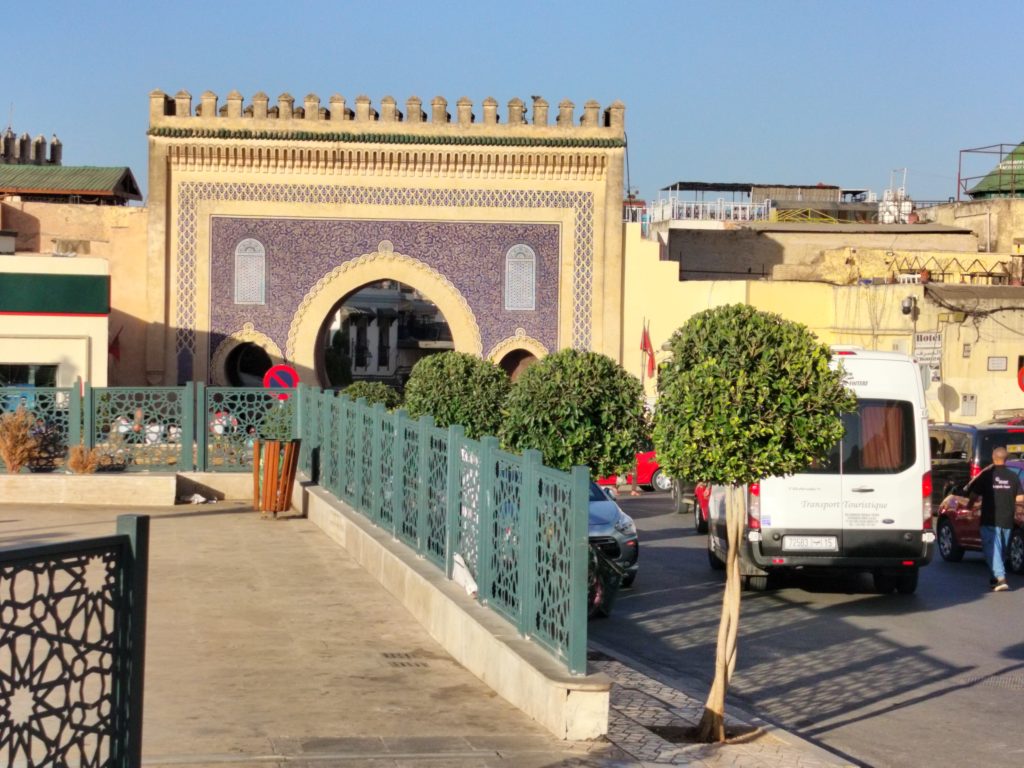
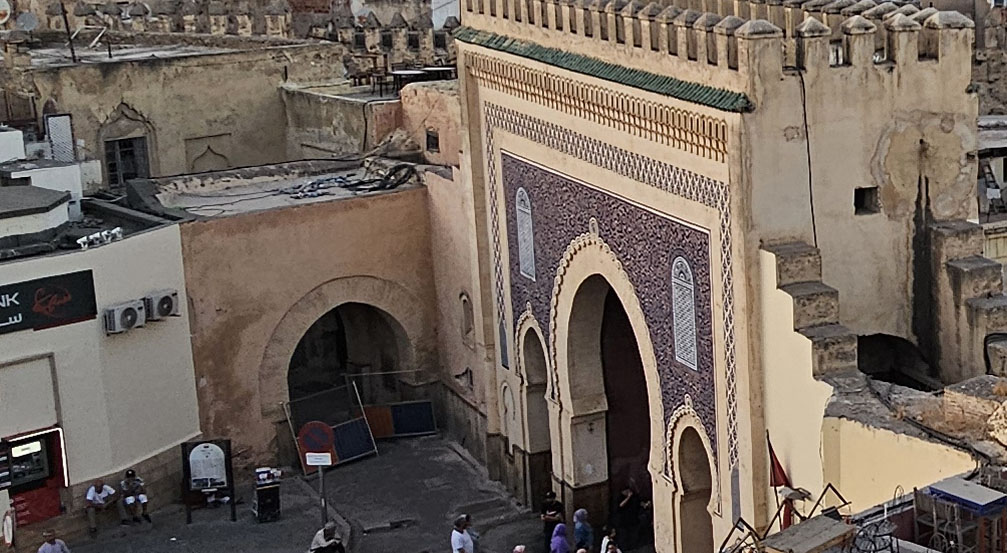
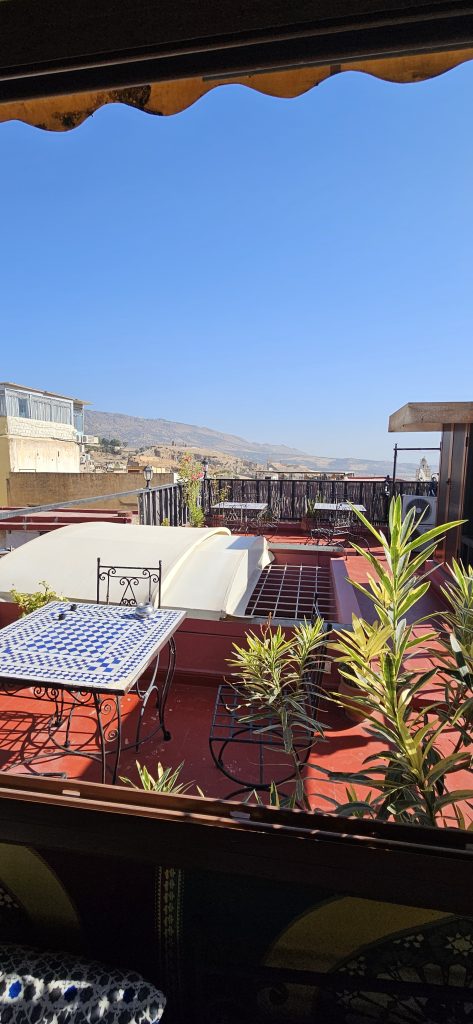
We arrived in Fès on the evening of Sept. 3, checked into Riad Dar Skilffo and then went out for dinner at a restaurant right next to Bab Boujeloud. We spent the next day exploring the old city and shopping for souvenirs. On Sept 5, we continued on into the Atlas Mountains.